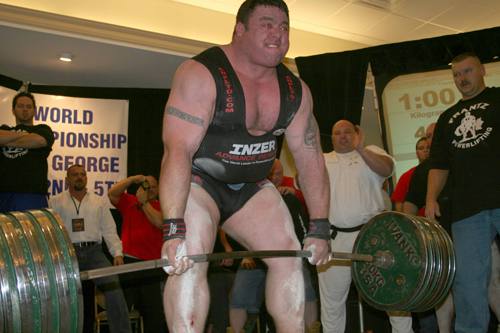
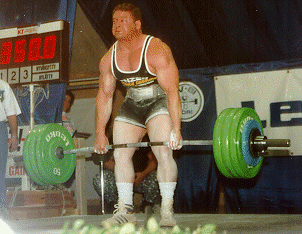
Our culture's attitudes to diet and exercise are fucked up. While this probably isn't news to many people, I've recently had the lesson hammered home in an unexpected way. A few months back I decided to take up regular exercise for the sake of both my mental and physical well-being. So far, so normal. This page on exercise, from the NHS website, contains a vast array of articles concerning the benefits of exercise and how to exercise: everything from jogging to Nordic walking to tai chi. The problem is that I didn't want to do some kind of safe, moderate cardio or stretching. I took up something not mentioned on the NHS's exercise page, or even in their "What's Your Sport?" personality test: powerlifting. It's pretty much perfect for me: I don't have to "work as a team" or even talk to anyone if I choose not to, I don't have to run anywhere, I can just put in my headphones, turn on some death metal, and lift something heavy until my muscles beg for mercy. I get a nice Zen-like concentration going, I get a post-workout high, and after a heavy day with the iron I sleep like a baby. Meanwhile, I'm stronger than I've ever been in my life, I have muscles where no muscles were before, and I have something to look forward to and feel good about afterwards. Point is, it's good for me. It's doing what I wanted exercise to do.
The "problem" is that, in order to succeed at powerlifting, you have to gain muscle. It's no coincidence that the best powerlifters are muscular as fuck. And in order to gain muscle, you have to gain weight. That's where the problem lies insofar as the uninitiated are concerned, because the prevailing view in our culture is that exercise and weight loss are inextricably linked. The top string predicted by Google for "workout to" is "workout to lose weight". For "exercise to", "exercise to lose weight" is third, and the top result is a Youtube video is an exercise video teaching people to lose belly fat (the impossibility of spot reduction be damned). Exercise to gain muscle, apart from "grow lolhuge biceps in three days using this one weird trick", or "get six-pack abs fast (which is really about weight loss anyway) is given comparatively short shrift. Physical activity is aimed squarely at weight loss rather than improving physical performance. Our culture apparently aims to turn out people with a BMI of 18-22, regardless of whether or not they can run five miles or lift their own bodyweight.
So what I'm aiming for, deliberate weight gain, is weird. Abnormal. Practically heretical. I'm "eating myself into obesity". My high-protein diet is "disgusting". I'm "bloating up". Even members of my own family assume that my physical pursuits must be unhealthy, purely because I've gained weight by doing them. And it isn't just me. See, for example, the abuse that dogged British Olympic weightlifter Zoe Smith (and her awesome response to it). This is, of course, an area in which women have it tougher: building muscle is even less acceptable for them than it is for men. But the direction in which this should all point is towards a healthier physical culture, one that focuses on physical performance (and individual measures such as body fat percentage rather than population measures like BMI) over numbers on a scale that often tell you little about someone's health and well-being.